
Even as a little kid, I loved—and still love—to tell stories. My imagination simply never rests, like an app running background refresh on Ultron (my trusty iPhone 13 Pro). I’m no therapist, but I think those stories helped me make sense of the world outside my own head. They gave shape to the chaos, a way to structure the narrative of a scene.
Take my toys, for example. I adored my G.I. Joe figures, but they were prohibitively expensive, which meant my collection was limited. Same with LEGO sets. So I did what any resourceful kid with a restless imagination would do: I combined them. I staged crossovers like the ones I saw on Hasbro comic book covers—G.I. Joe teaming up with the Transformers—only my stage was the bedroom floor.
It took me a while to understand the difference between those imaginary worlds of entertainment and the reality I lived in. That’s a heavy concept for a kid under ten to process. But looking back now, I realize I was already engaging with another big idea—something I didn’t have the vocabulary for at the time: passion projects.
And as I’ll share with you below, passion projects have always been my fuel.
Street Word of the Day
The following may be difficult to understand, but after a long engagement and courtship from 1998–2003, I was married from 2004–2008. That’s a story for another time.
One day while shopping at the Lynnwood [Washington State] Container Store, I spotted a novelty item near the register—the kind meant for impulse buys: Knock Knock Slang Flashcards.
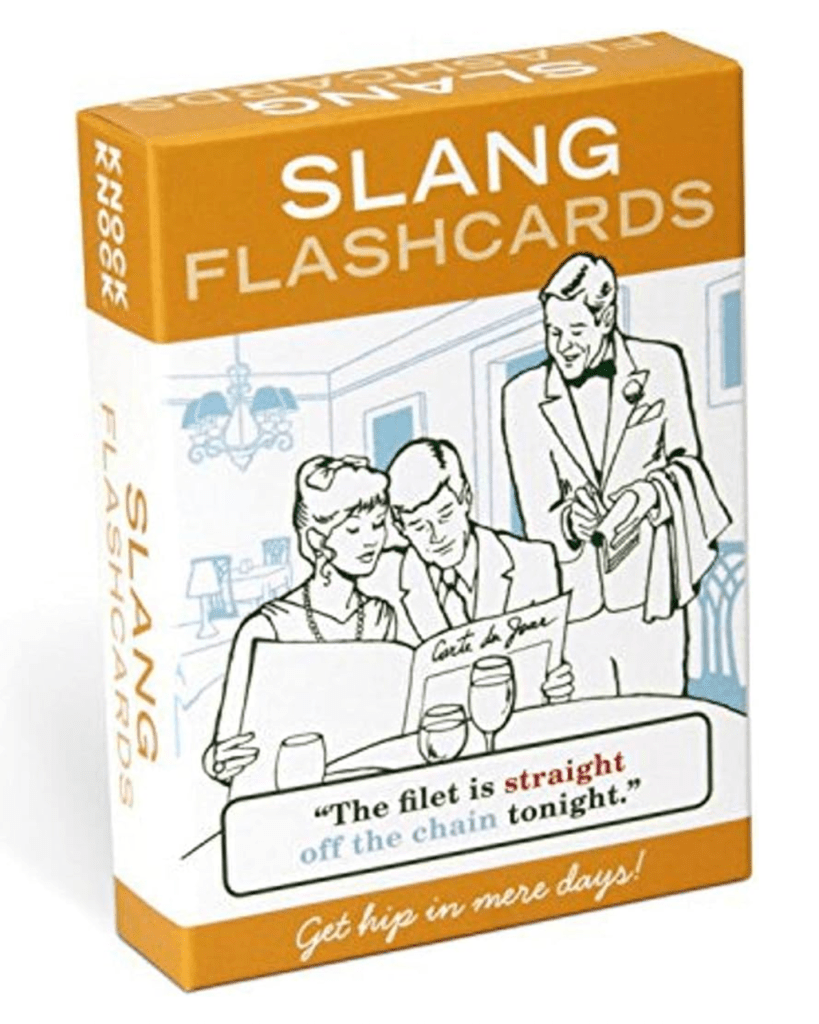
As a joke, I started using the company email system to issue what I called the Street Word of the Day (S.W.o.D.), teaching co-workers slang as if I were helping “white people become more ’hood everyday.” Since I’ve always had a keen interest in language and lexicon, I’d create a playful definition and add a sentence or two showing the word in action.
Each email featured:
- the word itself
- the type (noun, verb, etc.)
- a definition
- a visual
- and a sentence for application
S.W.o.D. grew so popular it drew the wrong kind of attention—management wasn’t thrilled I was using company assets for anything but actual work.
But then came a spark. A girl from the mailing/shipping department suggested: “Why don’t you write a story using all of these words?”
So I did.
Four stand-alone stories with a rotating cast of characters, each built around the day’s slang. Eventually, I developed a crush on the very co-worker who’d made the suggestion—my muse. She encouraged me to keep going, maybe even stitch the mini-stories together into a book.
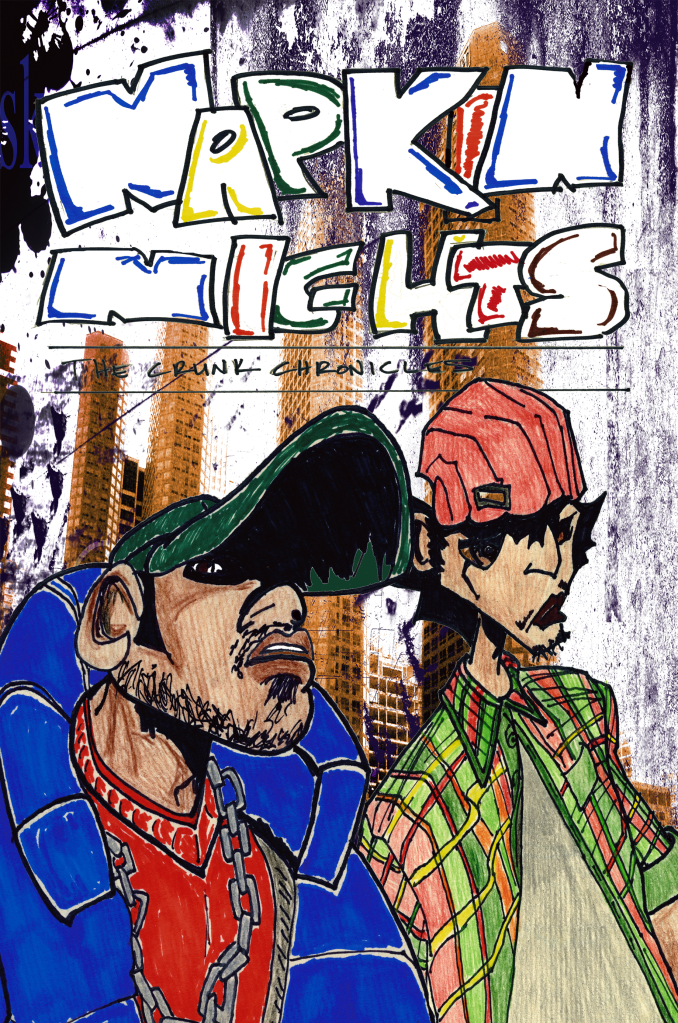
That book became Napkin Nights: The Crunk Chronicles. At first, it wasn’t calculated. The term “chronicles” came because each story was meant to stand alone, tied together only by the S.W.o.D.
But after my divorce, I had nothing but time—and too much of it was spent on drinking, partying, and socializing. Writing gave me something else to focus on. I pulled out my notes and centralized the characters into two: Derek and Juan—two sides of myself. Derek was the straight-laced, gaslit, no-fun Carlos. Juan was the streetwise chameleon, Los, from the other side of the tracks.
I reworked the first four chronicles, trimming the intros and outros so they flowed seamlessly, then built out the rest with the structure of a three-act play in mind.
I didn’t research how to write a book, how to market a book, or how to build an audience. It was just me—heart on sleeve, scribbling feelings into pages. And when the book came out? Sales were slim to none.
I was crushed. My first pancake had burned on one side and come out raw on the other—but that’s what first pancakes do. They teach you the temperature of the pan, the patience of the process, and the courage to flip again.
Napkin Nights wasn’t perfect, but it was essential. It taught me how to finish something, how to own my voice, and how to start over with more purpose. That imperfect beginning eventually gave rise to The Murder of Crowe, and now, The Clockwork Coroner—proof that every story, like every pancake, gets better once you find your heat.
(And yes—that cover art? I drew it myself.)
Phoenix Rising: Out of the Ashes
But the same muse who once inspired me… inspired me again, only this time in the opposite direction. My crush became the crusher—of my spirit, my confidence, my heart. The way I purged that storm of hurt, seething anger, and disappointment was through writing again.
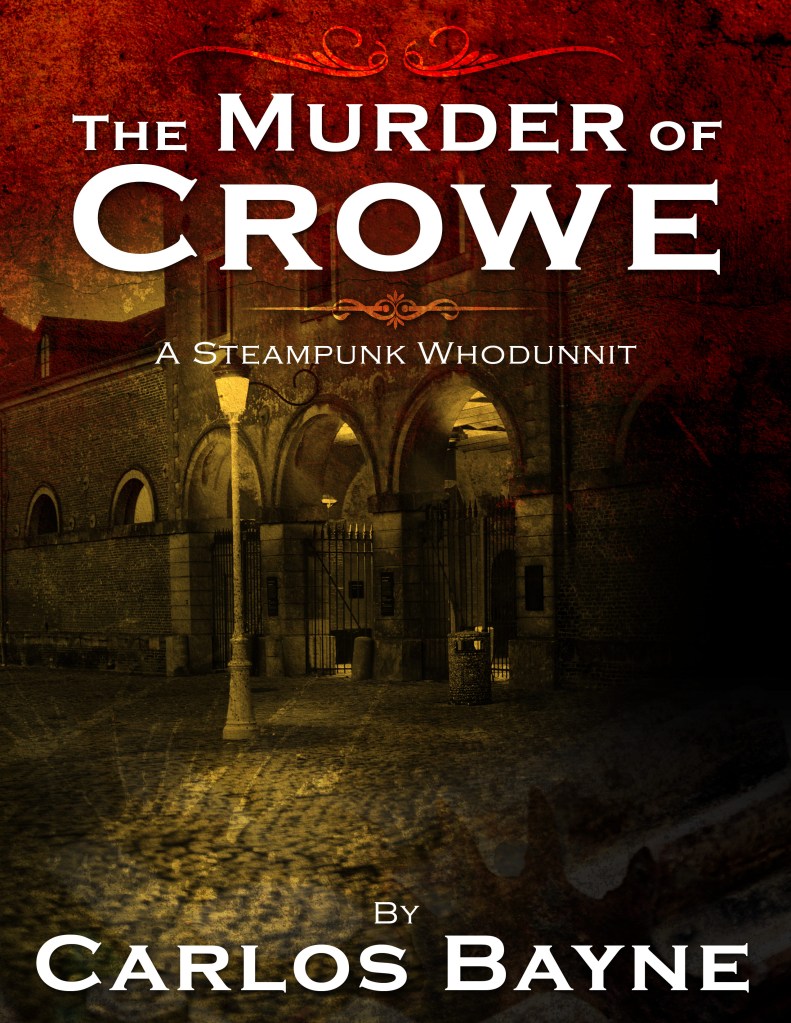
Out of the ashes came The Murder of Crowe: A Steampunk Whodunnit. A murder mystery, because, let’s be honest, everyone loves a murder mystery.
This time, though, I wasn’t just driven by raw emotion—I was driven by lessons learned from Napkin Nights. I bought the URL. I designed and printed business cards. I launched a Facebook page and linked it to an Instagram account. I even started a Patreon to drum up support. I set a deadline, met it, and held a release day at a local comic book store with pre-orders waiting.
And through it all, I remembered what my high school Creative Writing teacher, Mr. Hanby, drilled into us—the Three Tenets of Writing:
- The Title is Vital – Why am I even bothering to read this? What’s the hook, the draw?
- Write What You Know – If you don’t know much, then research until you do. Until you understand it fully.
- Keep the Pen Moving – Even if it’s just daily journaling, never let the ink dry. Movement prevents the block.
Those three tenets shaped me as a writer. They carried me from heartbreak to creation, from failure to growth, from raw passion to purposeful craft.
My Next Passion Project
Which brings me to today—writing The Clockwork Coroner, the sequel to The Murder of Crowe. I really oscillated from prequel – tell the origin story of how Junius and Archie end up by unceremonialy transferred to a Southern town that wouldn’t take kind to Yankees and their damn Union. OR … a sequel because I did intentionally left an ambigious ending for me to explore further, should I choose.
Well, I chose. And I chose to write a sequel versus the prequel. This time I’m not writing from heartbreak or chasing validation. I’m writing from a place of joy. Mentally and physically, I’m in a good space. My heart is happy, my soul content—two things that don’t always walk hand in hand, but right now they do.

I’m surrounded by love: Jennifer, who cheers me on daily; my sister Charrina, who’s believed in me since page one; and a circle of friends who remind me I don’t cook—or write—alone. That’s why this book feels different. It wasn’t born out of heartbreak, but out of joy.
Napkin Nights was my first pancake—crispy on one side, underdone on the other—but it taught me how to keep the skillet hot. It taught me that creativity isn’t about perfection; it’s about persistence, about showing up again with steadier hands and a clearer sense of taste. Every burnt edge and uneven bite led me to this moment, to a story shaped by patience instead of pain, and curiosity instead of chaos.
Now, The Clockwork Coroner feels like the batch I was meant to serve. It’s the story that carries the flavor of experience—the confidence of someone who’s flipped a few pages, a few pancakes, and finally found the heat that feels like home.
I write because I love telling stories. That’s the recipe I’ll never stop using.
More from me later,
 The Clockwork Coroner
Leave a comment